Why Tamarind Is a Staple in Indian Kitchens


Every cuisine has a bold, tangy ingredient that may feel a little “exotic” at first, yet instantly satisfies sweet-and-tangy cravings. In Indian cuisine, that ingredient is tamarind, commonly known as imli. Tamarind is valued for its tart flavor balanced by a subtle natural sweetness—often described as a blend of khatta (tangy) and meetha (sweet).
You will often find tamarind paired with ingredients like jaggery, red chili flakes, cumin, black salt, and ginger. These paired together create that classic tangy taste that’s found in many Indian street foods like pani puri, samosa chaat, fruit chaat, sev puri, ragda pattice, dahi vada, and jaljeera.
Tamarind originally comes from tropical Africa and is derived from the Tamarindus indica tree, a tropical plant that produces long, brown pods. Today, tamarind is widely cultivated in regions such as India, Pakistan, Bangladesh, Thailand, Mexico, and Central America.
It is available in several forms, including whole tamarind (hard pods or seedless blocks), which must be soaked in water before use, as well as tamarind paste and tamarind pulp, both of which offer convenient, ready-to-use options for cooking.
Tamarind can be found in everything from Indian street food, chutneys, rice, curries, and drinks. Below are some popular Indian dishes made with tamarind::
1. Tamarind Chutney

Sweet and tangy perfectly describe the flavor of tamarind chutney. This chutney can be made in a few different ways; the most common method is to simmer seedless tamarind pulp with jaggery, black salt, roasted cumin, and red chili powder. It’s cooked until it thickens into a slightly syrupy consistency, then cooled and stored in the refrigerator in a mason jar. Tamarind chutney has a rich, luscious texture with stickiness.
Tamarind chutney is a key topping for popular Indian street foods like chana chaat, dahi puri, and bhel puri, where the sweet-sour combination instantly elevates the flavors. It’s also commonly served alongside fried and crispy favorites such as samosas, aloo vada, kachori, and pakora.
2. Pani Puri
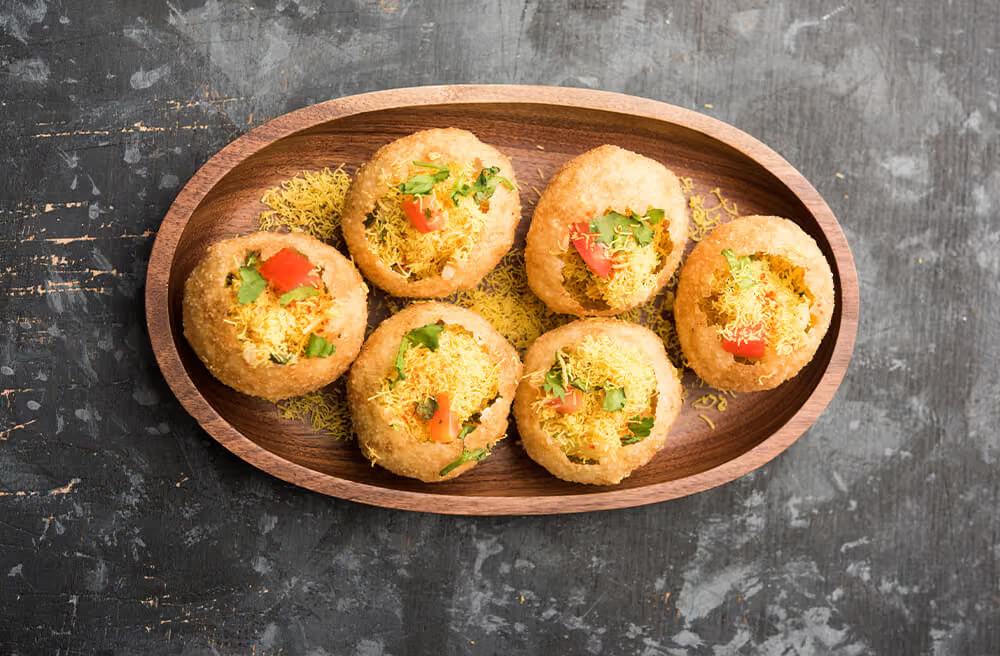
A beloved street-food favorite that is famously addictive. Pani puri is incomplete without tamarind. Pani puri is made with crisp, bite-sized puri shells that are deep-fried until light and hollow. The puris are cracked and stuffed with potatoes, chickpeas, onions, and green chilies, then dipped (or filled) with spiced tamarind water (pani). The moment you pop one into your mouth, you get an instant burst of textures and flavors—crunchy, tangy, and spicy, all at once.
Pani puri is that extremely over-the-top delicious street food that’s almost impossible to stop at just one. Once you start eating, you will find yourself eating “just one more” until you have lost count.
3. Sambar

Sambar is a spicy, lentil-based vegetable stew. It is made with lentils and vegetables such as tomatoes, carrots, eggplant, drumsticks, and bottle gourd, along with tamarind pulp. It is seasoned with herbs and spices such as sambar powder, curry leaves, mustard seeds, red chili powder, turmeric, asafoetida, and whole dried red chilies.
Sambar is a versatile dish that pairs well with everything from dosas to rice. It has a bold, spicy, and tangy flavor.
4. Hyderabadi Khatti Daal
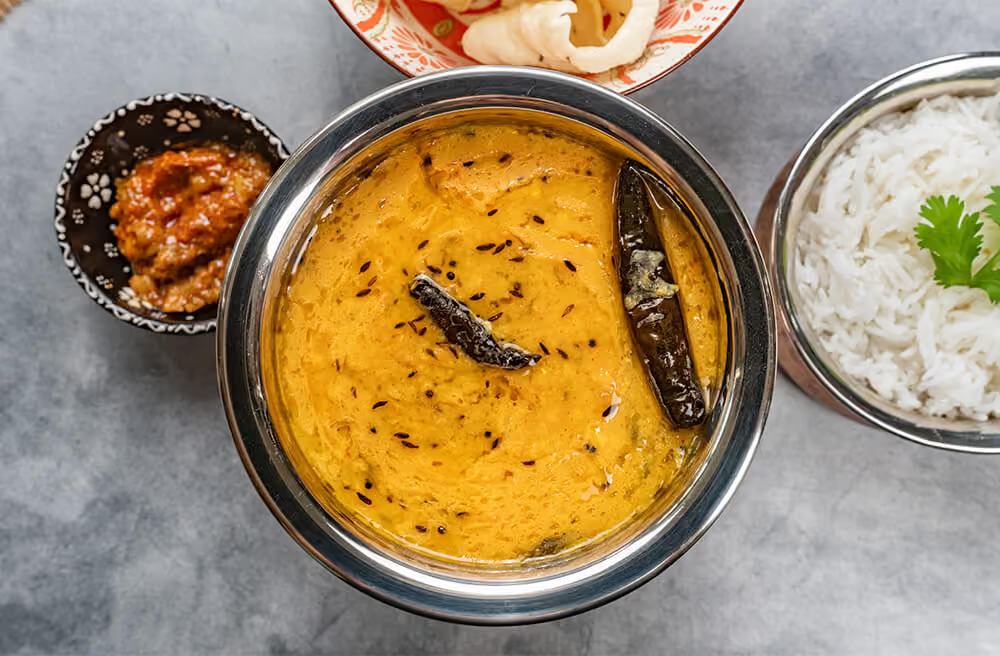
Khatti dal is a unique dal dish known for its tangy flavor, thanks to the addition of tamarind—“khatti” literally means tangy. Hyderabadi Khatti Dal is a beloved comfort food that brings together masoor dal with the bold sourness of tamarind and the warmth of Indian spices.
It’s known for its flavorful tempering (tadka) made with garlic, mustard seeds, cumin, and dried red chilies. Simple yet soulful, this dal is wholesome, comforting, and satisfying. Khatti dal is typically served with steamed rice or roti.
5. Puliyodharai (Tamarind Rice)
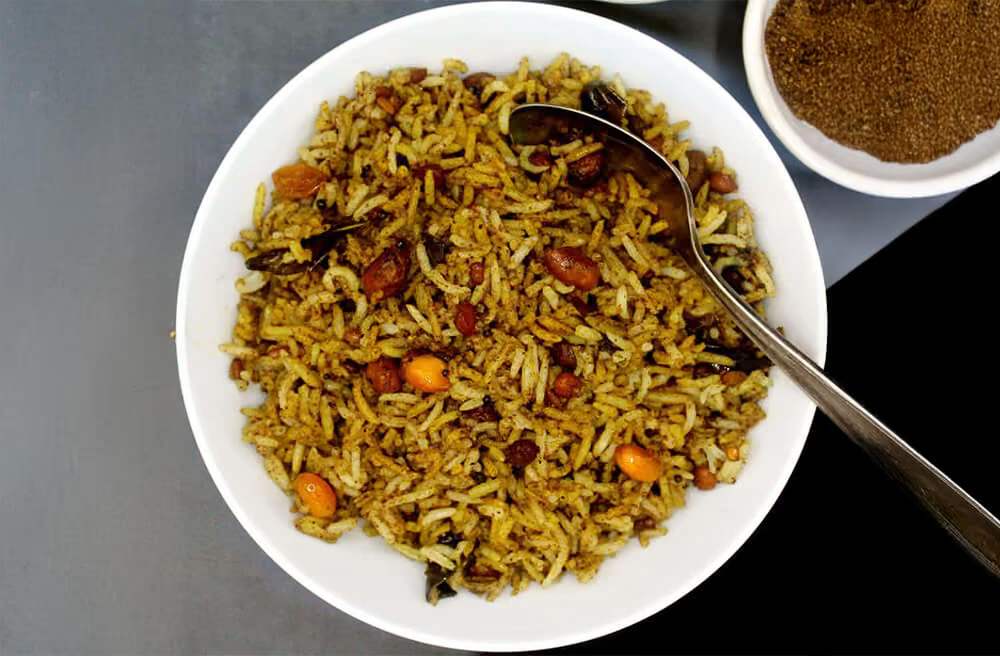
Puliyodharai is a popular South Indian rice dish that is simple and easy to prepare. Tamarind paste is cooked in a heated pan with salt, turmeric, puliyodharai powder, and jaggery until it thickens to a chutney-like consistency. In a separate pan, mustard seeds, chana dal, peanuts, dried chilies, curry leaves, and hing are tempered together.
The tempered ingredients are then added to the tamarind mixture and mixed well. The prepared tamarind paste is combined with cooked (boiled) rice and gently mixed until evenly coated.
Puliyodharai is typically served with papad, raita, or poriyal (stir-fried vegetables).
Tamarind can be described as a staple ingredient where a little goes a long way. Tamarind plays a vital role in iconic Indian street foods. Even when added simply as a topping or condiment, it adds remarkable depth and tangy flavor to a dish. Indian street food would feel incomplete without tamarind, as it is a key ingredient that defines their taste.
A true cornerstone of Indian cooking, tamarind is versatile and is used differently across regions in India, making it an essential pantry staple in Indian kitchens.