

Our Blogs
From culinary delights to cultural insights, find inspiration and knowledge about our food and our culture!
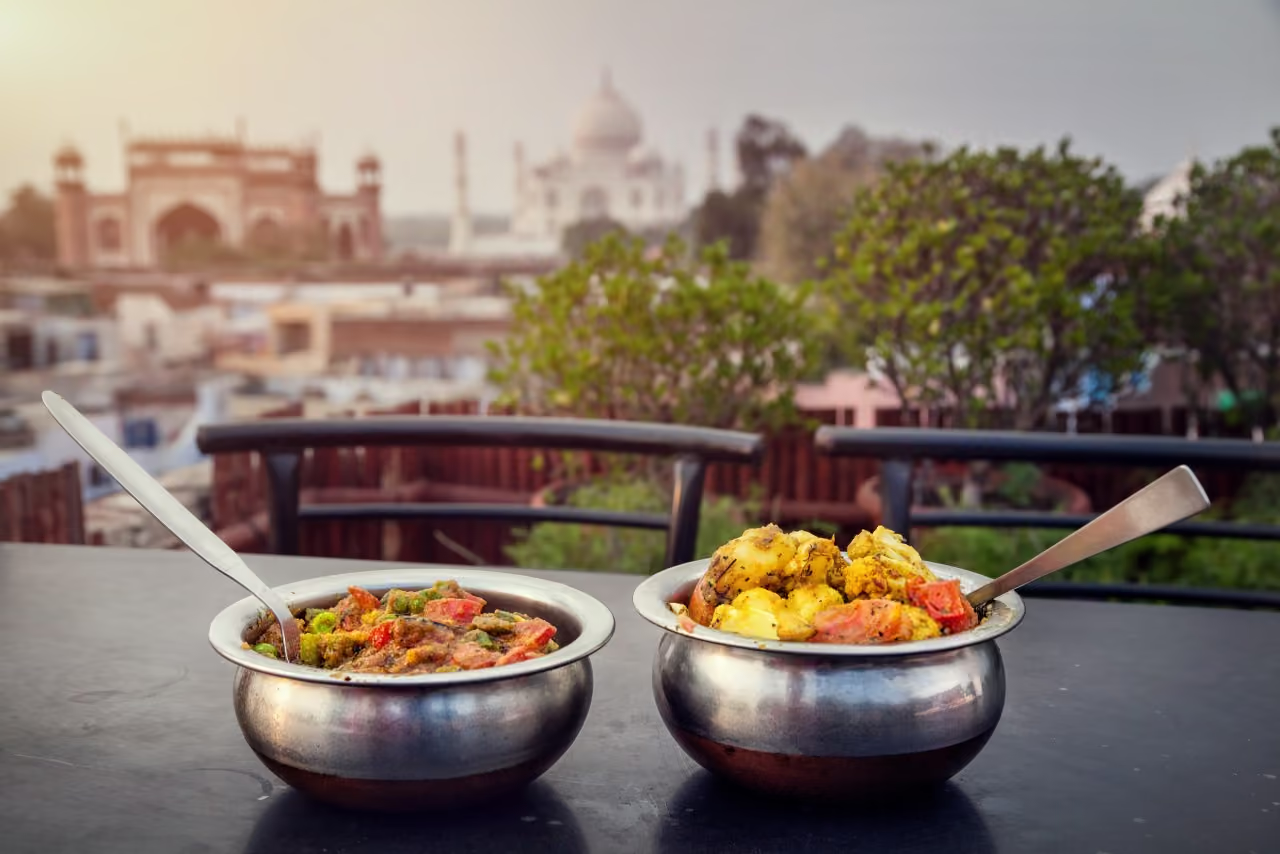

Your Guide to Indian Culinary Diversity
We discuss diversity of Indian food in our blog post. You can read about all the North, South, East, and West Indian foods here.

When most people think about “eating Indian food” in America - what they’re actually thinking about is a nationalized uniform version of Indian food. Most don’t realize that the regional diversity of Indian cuisine is as distinguished as its culture.
Each region of India has its unique varieties. A book could be written about the culinary intricacies of each region.
India has 29 states and seven union territories, but for the purpose of this blog post, we are dividing India into four regions: South India, North India, East India, and West India.
South Indian Cuisine

Source: RoughGuides
South India has five states: Kerala, Tamilnadu, Andhra Pradesh, Karnataka, and Telangana. Culture and geographic region play an important rule in South Indian food. The climate is hot and humid with most of the states being near the coast. South Indians are primarily vegetarian, yet pescetarianism is very common as the inhabitants are fond of seafood.
All things considered, South Indian food is the spiciest among all other regions. Most of the food is hinged around rice. Rice is pooled with sambar which is a soup-like lentil dish tempered with chilies and spices. Sambar is another soup-like lentil dish and is usually centered with rasam.
It’s common for hosts in South India to offer their guests papadum (crispy lentil pancakes), coconut based chutneys, and filtered coffee.
South Indian Staples
A meal is not complete without some form of rice complement. Lentils are a close second to rice. South-Indian favorites like idlis, which are basically steamed cakes prepared from rice batter and dosas, which are crepe-like pancakes, both contain Lentils.
Essential ingredients and spices: fenugreek seeds, chilies, tamarind, pepper and peppercorns, asafetida, mustard, and curry leaves.
North Indian Cuisine

Source: FranchiseIndia
The climate of North India flirts with both extremes of the spectrum. They have frigid winters and scorching summers. The states in North India include Madhya Pradesh, Chattisgarh, Jharkhand, Bihar, Haryana, Uttar Pradesh, Uttaranchal, Punjab, Himachal Pradesh, and Jammu & Kashmir.
Its connection with the sub-continent (commonly referred to as South Asia) influences both its food and culture. Two types of cuisines dominate North India - Kashmiri and Mughlai.
The curries of North India are moderately creamy, spicy, and thick. The use of nuts and other dry fruits are common. Dairy products like yogurt, milk, ghee, cottage cheese, and cream play a constituent role in the cooking style of both sweet and savory cuisines. The region also produces a dazzling amount of vegetarian foods, thanks to a large variety of vegetables and fruits which are available throughout the year.
North Indian Staples
North India is home to many different types of rotis (bread), but the most famous of these include tandoori naan, a bread prepared in a clay oven, and stuffed paratha, a flatbread commonly stuffed with vegetarian fillings. Mouthwatering Kulchas are also popular here; they are bread prepared from the fermented dough. Like South Indian culture, Rice is also renowned here but takes a more masala heavy-form in dishes like pulao and biryani.
Essential ingredients and spices: aniseed/fennel, garam masala, cloves, cinnamon, cardamom, chili powder, turmeric, dry red chilies, coriander, and cumin.
East Indian Cuisine

Source: InternetBusinessIdeas
East India is known for its mountains and beaches. The states of East India include Tripura and Orissa, Mizoram, Nagaland, Manipur, Meghalaya, Arunachal Pradesh, Assam, Sikkim, and West Bengal.
The favorable climate allows the region to grow a lot of fruit, vegetables, and rice. Vegetarian and non-vegetarians both feel at home in East India. Mongolian and Chinese cuisines have a strong influence in East India due to its proximity and history with the countries.
Three different schools of food rule East India - Orissa, Assam, and Bengali. Simplicity is common among all three. Preparations of the food are not elaborate, and people have a minimalist approach to ingredients. Frying and steaming are the prominent methods of cooking. Coastal areas take serious pride in their fish.
East Indian Staples
Sweets reign supreme in East India. Favorites include Sandesh, prepared from sugar and paneer, Rasgulla, made with dumplings in syrup, and Kheer, creamy rice pudding.
Essential ingredients and spices: mustard oil, yogurt, gram flour, maize, chilies (both red and green), and panch phoran (consist of five species: seeds of fenugreek, fennel, mustard, onion, and cumin).
West Indian Cuisine

Source: DifferenceBetween
States that encompass West India include Goa, Maharashtra, Gujarat, and Rajasthan. The states of Gujarat and Rajasthan have relatively drier climates that produce fewer vegetables.
Culturally, West India is vegetarian. Coconut and peanuts are predominant ingredients, and they are widely available. Goa has a lush green coastline that offers a variety of fresh seafood. Dishes like Xacuti and Vindaloo pay homage to the fact that until the 1960s, West India was a Portuguese colony.
We find an eclectic variety of dishes in West India. Rajasthani cuisine consists mostly of vegetables and usually has a spicy kick. Meats also have a home in Rajasthan -- Laal Maas, which is a red meat curry, is popular across the state.
Gujarat, on the other hand, is known for its sweet tooth. Many dishes add at least a pinch of sugar in Gujarat. Thaalis are a hallmark of Gujarati culture. These infamous giant plates contain various dishes including chapati, rice, sweets, and more.
The coastal areas like Maharashtra are popular for Malvani food, a coconut based sour curry that is usually eaten with seafood.
West Indian Staples
In Rajasthan and Gujarat: lentils, corn, dry red chilies, gram flour, yogurt, buttermilk, nuts, and sugar. In Maharashtra: rice, fish, peanuts, coconut, Goa fish and rice.
Essential ingredients and spices: fish, vinegar, nuts, coconut, sesame seeds, sugar, and dry red chilies.
We hope you enjoyed our dive into the different regions of India. Get social with us! Let us know which region is your favorite.
Diwali Around the World
India is synonymous with Diwali. The energy in the air is impalpable. However, Diwali’s wings spread way beyond its roots in India. Diwali celebrations are known across the world amongst many large and small countries and communities. Today, we will explore these areas and their unique Indian heritage.
India is synonymous with Diwali. The energy in the air is impalpable. However, Diwali’s wings spread way beyond its roots in India. Diwali celebrations are known across the world amongst many large and small countries and communities. Today, we will explore these areas and their unique Indian heritage.
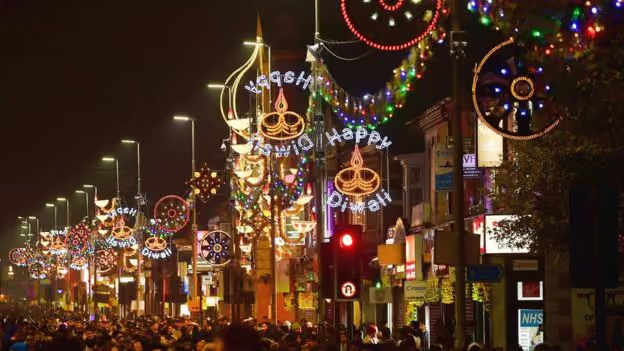
diwali(BBC)
Leicester, England
Leicester holds the silver medal for the biggest Diwali celebration around the world. Leicester is a mid-sized city in England’s East Midlands with a population a little above 300,000. Indians have made a home in this diverse city. A little above a quarter of the population is of Indian origin while the most spoken languages after English are Gujarati and Punjabi.
Leicester is also home to the “Golden Mile”, a stretch of road that is the city’s Little India. Up to 40,000 people attend the switch-on of the lights at the Golden Mile to mark the beginning of the Diwali festival. The festival lasts for around two weeks and has become a cornerstone for Europe’s Diwali celebrations. The city takes pride in their Diwali festival and has even flown Rangoli artists all the way from India.
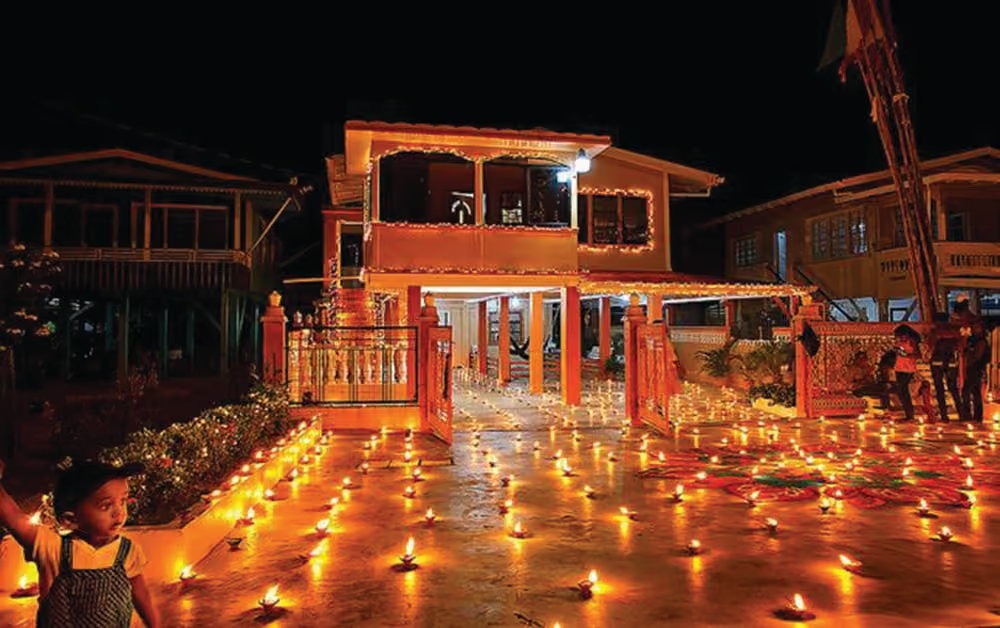
Guyana(Explore Guyana)
Guyana
Guyana is a country on South America’s northern coast and holds a population of around 8 million. Diwali is a national holiday in Guyana and has been celebrated since 1853. Guyana is known for its energetic displays during the festival of Diwali. Beyond the traditional Diwali celebrations, the people of Guyana holds celebratory motorcades in several cities. The people deck out their vehicles with lights and decorations and drive the cities in long parades attended by thousands.
The Indians of Guyana have a very interesting backstory as they were initially recruited as indentured servants and faced harsh conditions upon their arrivals. As of the 2012 census, Indians make up 40% of Guyana’s population. Today, Indians celebrate “Indian Arrival Day” on May 5th to commemorate the first Indians who arrived in Guyana to work on sugar plantations.

Triolet-mauritius-diwali(Roam New Roads)
Triolet, Mauritius
Triolet is a village of approximately 24,000 people located in the northern part of Mauritius, an Indian Ocean island nation that is known for its beautiful landscapes and geographic diversity. The village of Triolet transforms during Diwali and a small little village shines a beacon of light that is becoming increasingly visible through the world.
Mauritius’s population is around 60% of Indian-heritage of which 80% follow Hinduism. Most Mauritian Indians are from the Bihar / Northern India area. Mauritius also celebrates Indian Arrival Day. It is celebrated on November 2nd to commemorate the arrival of Indian laborers.

Trinidad (International Business Times)
Trinidad
Diwali was originally contained to the local villages and Hindi households in Trinidad and Tobago. It was not as ubiquitously celebrated as the other major religious holidays such as Christmas until a few passionate individuals decided to form a council to spread the message of Diwali.
Divali Nagar (City of Lights) was born. This Caribbean flavored Diwali celebration is now an occasion to unify a nation that consists of Hindus, Muslims, Christians, Indo-Trinidadians, and Afro-Trinidadians. The festival day is regarded as a national holiday.
Trinidad and Tobago’s Indians arrived as indentured servants in 1845 and now comprise 37% of the country’s population. They celebrate Indian Arrival Day on November 2nd.
singapore(Visit Singapore)
Singapore, Malaysia
Indians comprise only 8% of Singapore’s population but are known for their proud heritage. Singapore has its own Little India which is legally preserved by the government as a historic site. Singapore calls Diwali by a more traditional name, Deepavali. (Learn more about the different names of Diwali)
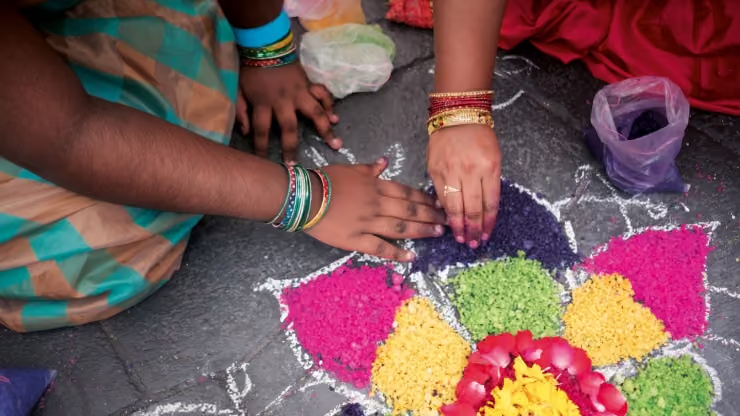
During Deepavali, Hindus across the city decorate their homes with brightly colored pictures created out of flour, rice and flower petals. Rangoli artworks shade the city as people of various religions and ethnicities come together to attend the cultural events during this festive period.

australia(Go Eventz)
Australia
The cities of Melbourne and Sydney are the focal points for Indian-Australians. Pockets of Indians are spread across these two cities. The Federation Square in Melbourne takes center-stage during Diwali where the largest of the Australian celebrations of Diwali take place.
Diwali is not an official government holiday in Australia but it is slowly making its presence felt as the Indian population grows in Australia. Currently, Indians only comprise 72% of Australia’s population, but are the fastest rising minority group in Australia.
Is there a country we didn’t recognize? Let us know in the comments or on our Facebook page!
Indian Foods to Eat in the Summer
Indian Summer Foods,Alphonso Mangoes,Kulfi,Lassi, Bitter Gourd,Sugarcane Juice,Watermelon,Coconut Water
Rejoice! Summer is approaching! In India, summers can be tough.
Our summers may not be as hot as it is in India, but if you're living in Houston, Dallas or Atlanta it may soar up to 100 degrees Fahrenheit (37.7 Celsius).
Different seasons call for different foods, but summer is one of our favorites. Refreshment -- the feeling we describe when anything cold provides a pleasant jolt of energy throughout our bodies.
In celebration of summer, here is a list of our favorite summer beverages, snacks, and dishes!
Alphonso Mangoes

Mangoes are already known as the king of fruits, but Alphonso takes it one step further and is hailed as the king of the kings. An authentic cold sweet Alphonso mango on a fresh summer day will help you grasp why this champ has held the title for so long.
Kulfi

Mango, pista, or malai? It is hard to choose one. Kulfi is a denser, creamier, and more popsicle-like version of ice cream. Kulfi is the quintessential South Asian summer treat because it makes for a satisfying post-meal desert.
Lassi

There are many types of Lassi, but sweet Lassi has a special place in our hearts. Sweet Lassi is a yogurt-based drink that is synonymous with the scorching summer heat. It is a special delight for those who are lactose intolerant as yogurt has relatively low levels of lactose compared to milk. There is a lassi for everyone! Popular types include mango lassi, sweet lassi, sour lassi (the original), and even bhang lassi.
Bitter Gourd

Not all summer food has to be sweet. Gourd is a great healthy alternative with an impressive nutrient profile for those who try to avoid refined sugar. Gourd is an acquired taste, but the health benefits of acquiring it are sweet. It is commonly touted for its medicinal benefits.
Sugarcane Juice

Sugarcane Juice is made from pressed sugarcane. It is popular throughout South Asia and is commonly used to beat the heat. It contains about 15% natural sugar and is full of other nutrients such as organic salts and vitamins. Fans of sugarcane juice routinely point to the energy boost it provides and tout its high concentration calcium, magnesium, potassium, iron, and manganese.
Watermelon

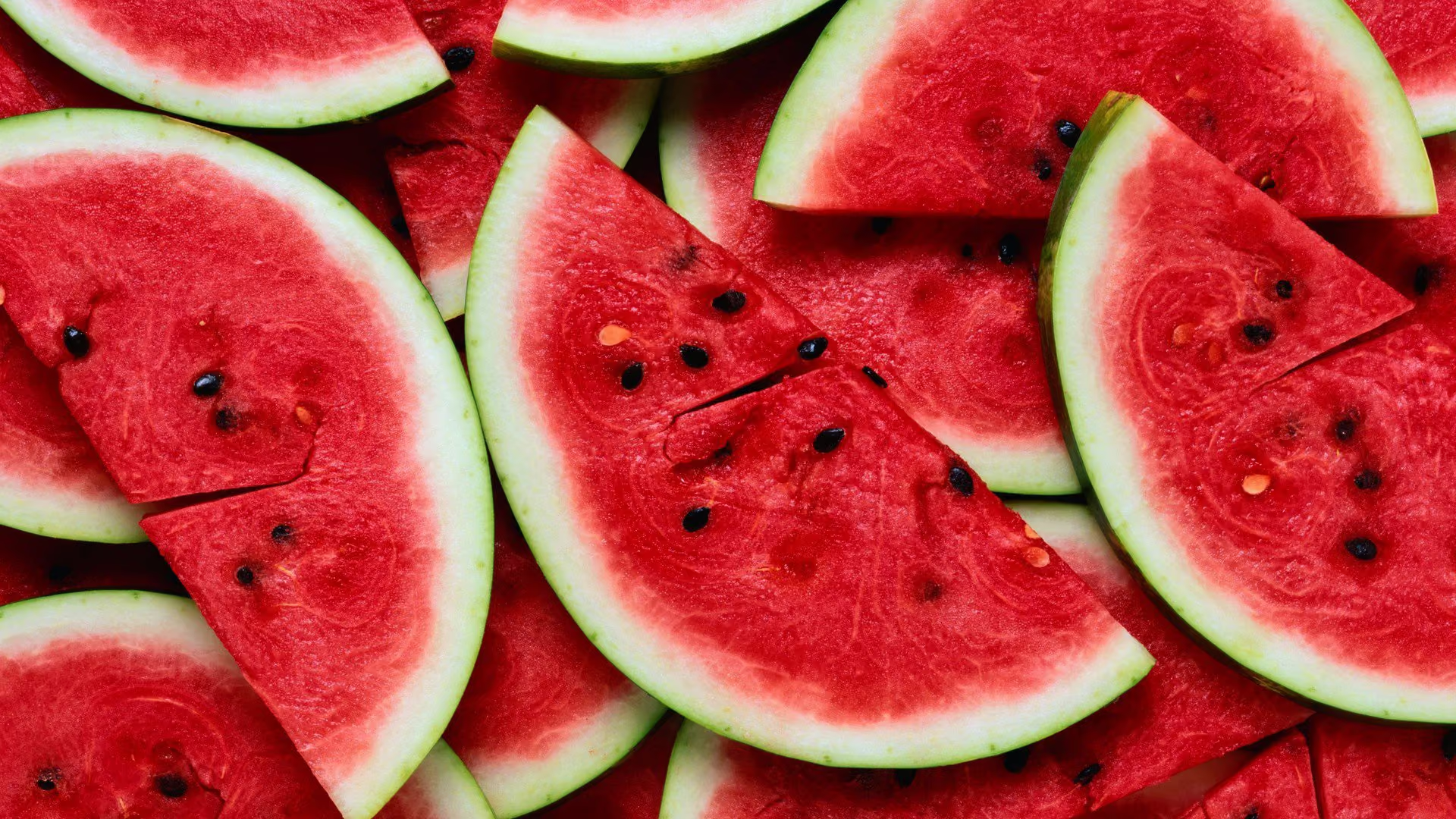
Did you know that July is National Watermelon Month? That’s how closely this fruit is tied together with Summer. Watermelons are around 91 percent water (fun fact: water is 100 percent water) and can be classified as fruits AND vegetables! Watermelon’s claim to health fame comes from its richness in lycopene, which many claim is a powerful antioxidant.
Coconut Water

Coconut Water may be an emerging health craze in the United States, but it is an old-school staple in South Asia. It is abundant in many tropical countries and is sold by street vendors who use a machete style knife to cut them open in front of customers. Coconut water also has potassium and electrolytes which make it a great natural rehydrating alternative over commercialized sports drinks.

For South Asians, entertainment flows through our blood. So it is no surprise that we have left our mark on digital media. Many young South Asians are making a name for themselves on the internet and have become full on sensations. We made an awesome list of our favorites!
Lilly Singh
Lilly Singh, also known as “IISuperwomanII,” is one of the most popular YouTubers in the game with over 11 million subscribers. She proves that even internet sensations can become household names. She is in the Top 100 YouTube Most Subscribed list and ranked 3rd in Forbes 2016 list of highest paid YouTube stars. Singh has touched the funny bone of audiences worldwide and has collaborated with celebrities like Priyanka Chopra, The Rock, and Selena Gomez. Lily Singh has officially crossed over from internet sensation to a legit media personality.
Check out her collab with Priyanka Chopra, it’s one of our favorites!
ZaidAliT
The 21-year-old Canadian born internet star Zaid Ali is known for his viral Facebook and YouTube videos. His multilingual talents gives him the ability to resonate with English, Hindi/Urdu, and even Punjabi audiences with equal warmth. Zaid Ali has also built a large following in Pakistan, where he was recently flown into to host the Hum Style Awards. With over 5 million likes on his Facebook page, young Zaid Ali is proving that being himself is a great look.
Deepica Mutyala
Deepica Mutyala’s rise to fame began when she released a video on reducing dark circles. Ten million views later she is a regular contributor and beauty expert on the Today Show and has also made appearances on other shows like Dr. Oz. Originally from Texas, Deepica now lives out her dream in New York as a social media personality under the handle @deepicam. Check out her Diwali inspired makeup tutorial!
Momina Mustehsan
Coke Studio hit for six when they choose Momina to sing alongside Rahet Fateh Ali Khan in a new rendition of Javed Akhtar’s infamous “Afreen Afreen.” Momina ended up being the perfect “Afreen” for the song. Her mixture of eye-catching natural beauty and soothing vocal talent has opened the doors of fame for Momina. On top being of a musician and engineer, she is now also a brand ambassador and philanthropist.
JusReign
Jasmeet Singh, also known as “JusReign,” is one of the funniest Desi comedians out there. His knack for humor goes beyond just skits (which are great too). He knows how to tell a story and how to be plain out goofy. Though he has amassed a mainstream following, his roots are of Sikh Canadian. Singh has used his platform to address serious issues as well. The comedian recently took to twitter to chronicle his experience being profiled by the TSA for wearing a turban. Check out his take on old-fashioned local Indian Grocery stores.
Sabrina Siddiqui
Sabrina Siddiqui is a Washington-based political reporter for Guardian news who has worked her way to prominence in the news industry. She covered the recent presidential election where she broke out with her opinion piece that chronicled her experiences as a Muslim reporter. Siddiqui has advocated for Journalism as a career choice for South Asians and hopes to influence young South Asians in following their political passions and dreams.
You can find her on theguardian.com
Or follow her on twitter @SabrinaSiddiqui
Bonus Content:
JustReign - Bounce

Holidays, Holidays, Holidays! A few tips to make this week easier
A few tips that can help you enjoy the holidays with a little more ease! Don't wait until the last minute, Have a plan but be flexible, keep the weather in mind, don't put it all on yourself, and remember to have a good time!
It is that time of the year. In many places snow is on the ground and Christmas lights and decorations are up. Many of us are doing last minute shopping and finalizing our plans for the holidays. The children are on winter break and you cannot remember if that is a good thing or not. The holidays give us many things to look forward to from great food, comical moments with family and friends, a little break from our busy lives, presents, among many other things. If you're feeling overwhelmed, remember, a week after Christmas Day you can unwind and celebrate the New Year! Now here are a few tips that can help you enjoy the holidays with a little more ease!
1. Don’t wait until the last minute – this goes without saying, but it is still hard to watch last minute shoppers and buyers attempting to navigate through the chaos of a mall. While we all do not have the luxury of time off before Christmas Day, it is still important to make whatever “free-time” you have useful. From planning your dinner, getting supplies and presents, to even figuring out guest parking—being prepared is smarter than waiting for the situation to arrive, which goes into our next tip…
2. Have a plan, but leave some flexibility – No matter what you do or plan, there can always be a setback or delay. It happens, and usually it happens at the worst possible times. From flight delays to traffic, there are many things that can occur. It is difficult to manage large groups of people, especially at a busy time like this. It’s also important that you are mindful of the weather. So be flexible, plan ahead, and understand that stressing yourself out does not accomplish anything.
3. Keep the weather in mind -- The snow is pretty but the winter is tough. The only thing worse than the cold is being stranded in the cold. Make sure your car is in order. Good snow tires are key in the struggle for traction when driving in the snow. Make sure your car is equipped with the essentials like a portable phone charger, jumper cables, salt, and even a blanket.
4. Don’t put it all on yourself – holiday season is about celebrating with family and friends. Don’t be afraid to ask them for help! If you are hosting, you should not be doing everything alone. Delegate some duties to other family members. It helps take a task off your shoulders, while involving others. Also if you are a guest, ask your hosts if they need help. A little courtesy goes a long way!
5. Lastly, have a good time – it is the holidays and you should be cheering and smiling. Many people take this time of the year for granted. Remember not everyone will be home for the holidays or get the time off to celebrate. Enjoy being with your family and friends and share those stories and create some great memories! Be safe, we wish you all the best!
Happy Holidays!
A little history of the 4th Thursday of November: Thanksgiving Day
What is the history of Thanksgiving Day? Why do we still celebrate it? Why does our President "pardon" a turkey? Let us take a look...
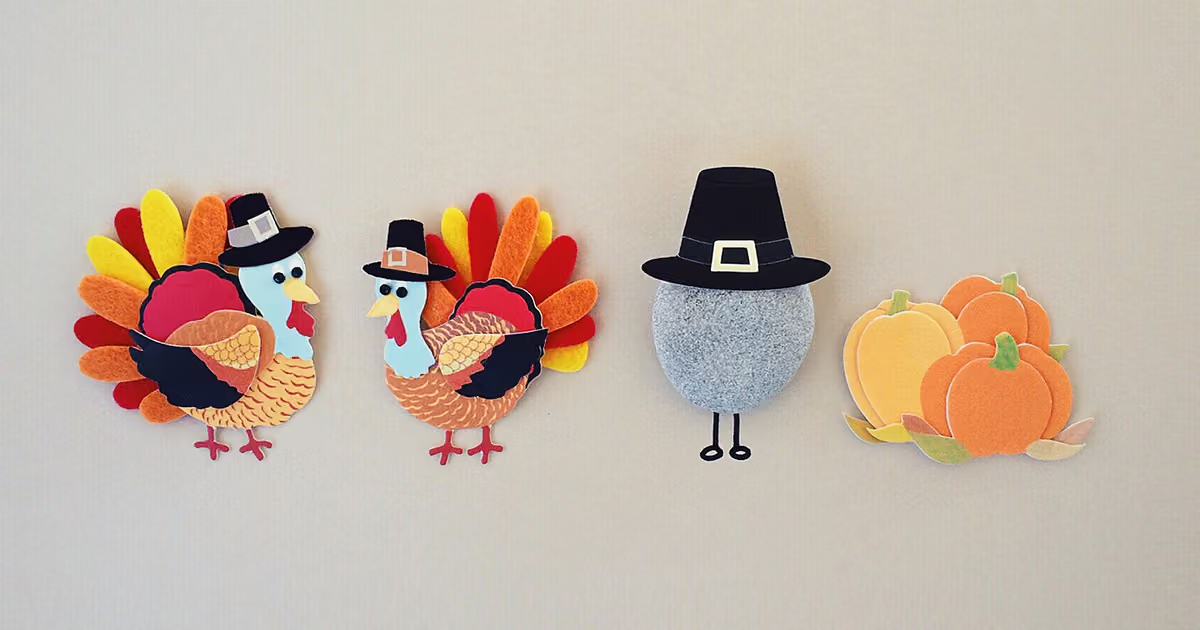
Here in the United States, Thanksgiving Day is a national holiday observed on the fourth Thursday of November. Thanksgiving is celebrated in in many different nations, among a variety of cultures, at different times throughout the year. Although it has deep history with roots in religious and cultural traditions, it is now more commonly celebrated in a secular manner. So what is the history of Thanksgiving Day? Why do we still celebrate it? Why does our President “pardon” a turkey? Let us take a look…
In 1621, the Wampanoag Native Americans and other local tribes, who lived in present day Massachusetts and Rhode Island, befriended the pilgrims of Plymouth. The local Native Americans taught the pilgrims how to cultivate corn, extract sap, catch fish and avoid poisonous plants. In November 1621, the Pilgrim’s successfully had their first corn harvest and the Governor organized a celebratory feast and invited their local Native American allies. The festival lasted for three days and now is considered the “first Thanksgiving.” Among the many conflicts between Native Americans and European colonists, this alliance was remarkable and unfortunately, one of few rare examples of peace and harmony during a tragic time period in our history. Since then it was celebrated on and off since 1789, after a proclamation by our first president, George Washington. However, it was President Abraham Lincoln in 1863 during the American Civil War, who proclaimed it an official national day thus recognizing it as a Federal Holiday.
So 395 years later and we are still celebrating this? Of course we are! Just like the Pilgrims at Plymouth, many of us have much to be thankful about. In today’s society we often forget to count our blessings and just focus on the now and our problems. It is always nice to have a day like Thanksgiving, where we are surrounded by family and close friends. Where we can stop focusing on the troubles of our world for just an instance and focus on each other. Where we can be thankful for a delicious meal and great company. Just remember that if you can do any of the above, you are already more fortunate than the majority of the population. Being thankful does not just mean having to say the words. Being thankful can also be a gesture or an action. Give some money to a charity you always wanted to or send some of your leftovers to a food bank or give it to a homeless person. Do you have to? Of course not. Do whatever you believe is best, but remember all our lives are intertwined, meaningful and can be impactful, just like the Native Americans and Pilgrims at Plymouth.
Finally, what is the deal with “pardoning” a turkey by our Commander in Chief? Although the history of why turkey is so commonly used is a bit of a mystery, turkey has become a traditional dish and a norm for Thanksgiving for quite some time. When the Pilgrims and Native Americans celebrated their first feast, it is said that they may have had fowl, venison, fish, lobster and mussels, corn, squash, stew, among other things. It is not for sure if they had turkey, but many say it may have been present. The “pardoning” of a turkey is part of the National Thanksgiving Turkey Presentation ceremony that takes place at the White House every year. The President is presented a live domestic turkey, which is then spared and free to live out the rest of their days. "It is a little puzzling that I do this every year," Obama said in 2014, "but I will say that I enjoy it, because with all the tough stuff that swirls around in this office, it's nice once in awhile to just say, 'Happy Thanksgiving.' "
So Happy Thanksgiving everyone!
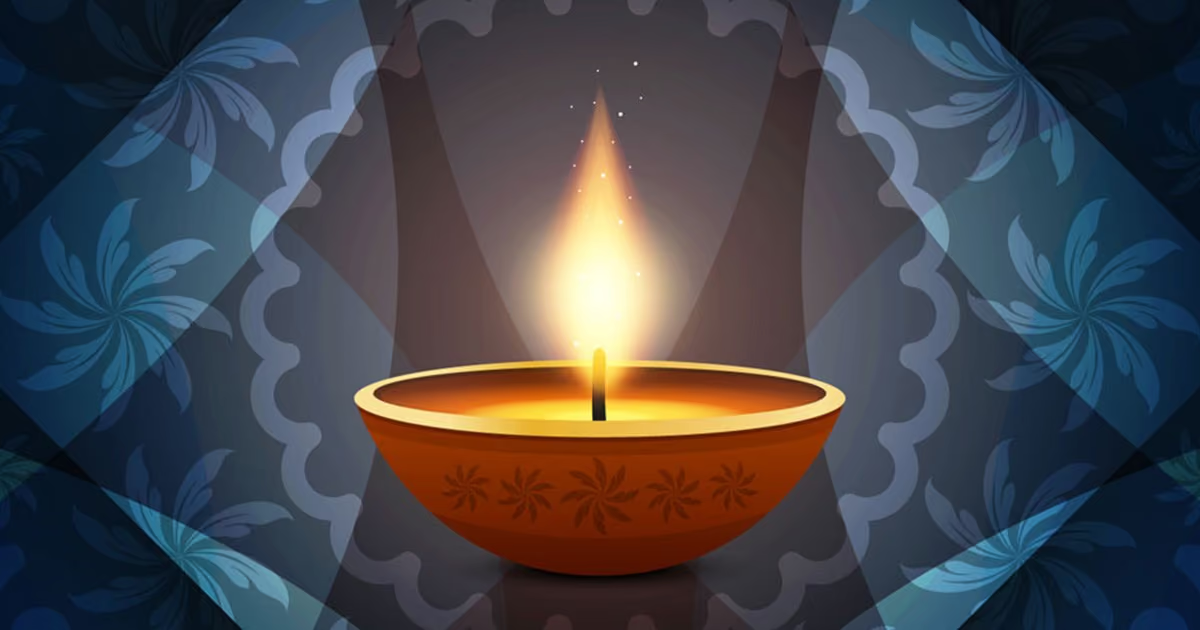
President Obama had Indian supporters on their feet when he wished Saal Mubarak and became the first US president to publicly light the Diya in celebration of Diwali in 2009. Prior to Obama, there was a hilarious episode of The Office titled “Diwali”, written by Indian cast-member Mindy Kaling, that received critical reception. It was a meaningful moment for Indian culture as it was the first time an American comedy series depicted Diwali. As Diwali approaches, we’d like to have our say on why we think people appreciate this beautiful pluralistic Holiday.
1. An age-old tale
The story of Diwali is as old as time itself. It symbolizes the victory of good over evil. In a Universe full of darkness, Diwali celebrates the light (good) within us all. Diwali is best described visually as a combination of Christmas & the Fourth of July -- Diya’s animate the inside of homes while a cacophony of fireworks are heard throughout the streets in India.
2. What’s in a name?
Diwali can be spelt Diwali, Devali, or Deepawali. Diwali comes from the Sanskrit word Deepawali which literally means an array of lamps. In Southern parts of India, people still call it Deepawali but it is assumed as the use of Sanskrit diminished, it was modified to Diwali.
3. Diwali Origins
Historians claim that Diwali precedes recorded history. They tend to agree that the harvest season plays an important role in the origin of Diwali. Occurring before winter, it marks the last harvest season of the year where farmers close their accounting books and prepare for the New Year. Historically India was an agricultural society thus farmers would pray to Lakshmi, the goddess of wealth, for success in the new financial year. Today this practice applies to all businesses in India as the day after Diwali marks the first day of the new financial year.
4. Pluralism in Action
Diwali is celebrated by Hindus, Sikhs, and Jains. Though each religion finds common meaning and shares common cultural practices – how they arrive to the conclusion varies. Hindus from different regions of India each have their own version of the story. Generally speaking, Hindus from Northern India celebrate King Rama’s return to Ayodhya after he defeated Ravana by lighting rows of clay lamps. Hindus from Southern India celebrate Narakasura’s defeat at the hands of Lord Krishna. While Hindus from Western India celebrate Lord Vishnu dispatching the demon King Bali to rule the netherworld.
In Jainism, Diwali memorializes the anniversary of Lord Mahavir’s attainment of Moksha. Jains believe that reaching Moksha grants freedom from samsara, the cycle of death and rebirth. The concept of Moksha plays a central role in Hindu traditions as well.
Sikhs refer to Diwali as Bandi Chhor Devas (Day of Liberation). They celebrate the release of the Sixth Guru, Guru Hargobind, from the Gwalior Fort. Hargobind refused to leave without his other 52 princes when the Mughal Emperor Jahangir granted his release. Jahangir in his cleverness stipulated that however many princes could hold onto him as he walked out, could leave with him. Thus Hargobind created a special garment whose hems each prince held onto as he successfully walked out.
Newar Bhuddists know Diwali as Ashok Vijayadashami. They believe that the great Mauryan Emperor Asoka embraced Buddhism on this Day.
As with many celebrations in the Indian diaspora, the interpretation differs depending on who you ask and where they live.
5. Gambling is cool during Diwali
Gambling actually holds religious significance based on the traditions and legends of Diwali. It is said that on this day Goddess Parvati played dice with her husband Lord Shiva. She decreed that whoever gambled on Diwali night would prosper throughout the year.
Though some frown upon it, ultimately the tradition has found roots in play. Families revel in low wager games of dice and cards. The most popular card games played are Flush (Teen Pati) and Rummy. As the saying goes, “If you don’t play cards on Diwali, you will be reborn as a donkey” (it sounds better in the original language).
6. Diyas & Fireworks, OH MY!
The idea that light can conquer darkness is on full display as the country of India dazzles during Diwali. Similar to Christmas, Indians use lights, fireworks, and striking Rangoli decorations that animate the country. On one of the darkest nights of the year, India is illuminated as the energy of the country seemingly conquers darkness in unison.
Regional cultural practices dictate why certain regions light the Diyas, but generally the Diwali lamp signifies the removal of internal and external spiritual darkness.
7. FIVE Days of Magic
As people change, so do traditions. You would be hard-pressed to find an Indian-American who can take 5 different days off annually to celebrate Diwali.
Traditionally Diwali is a 5-day celebration. The first two days are spent cleaning and preparing the home for the festivities to follow. The third day is the climax where epic meals and lavish displays of lights and fireworks rival America’s Fourth of July. On the fourth day, family members and friends visit each other bearing gifts. On the fifth day, brothers visit their married sisters who welcome them with awesome meals.
How to Snack Like an Indian
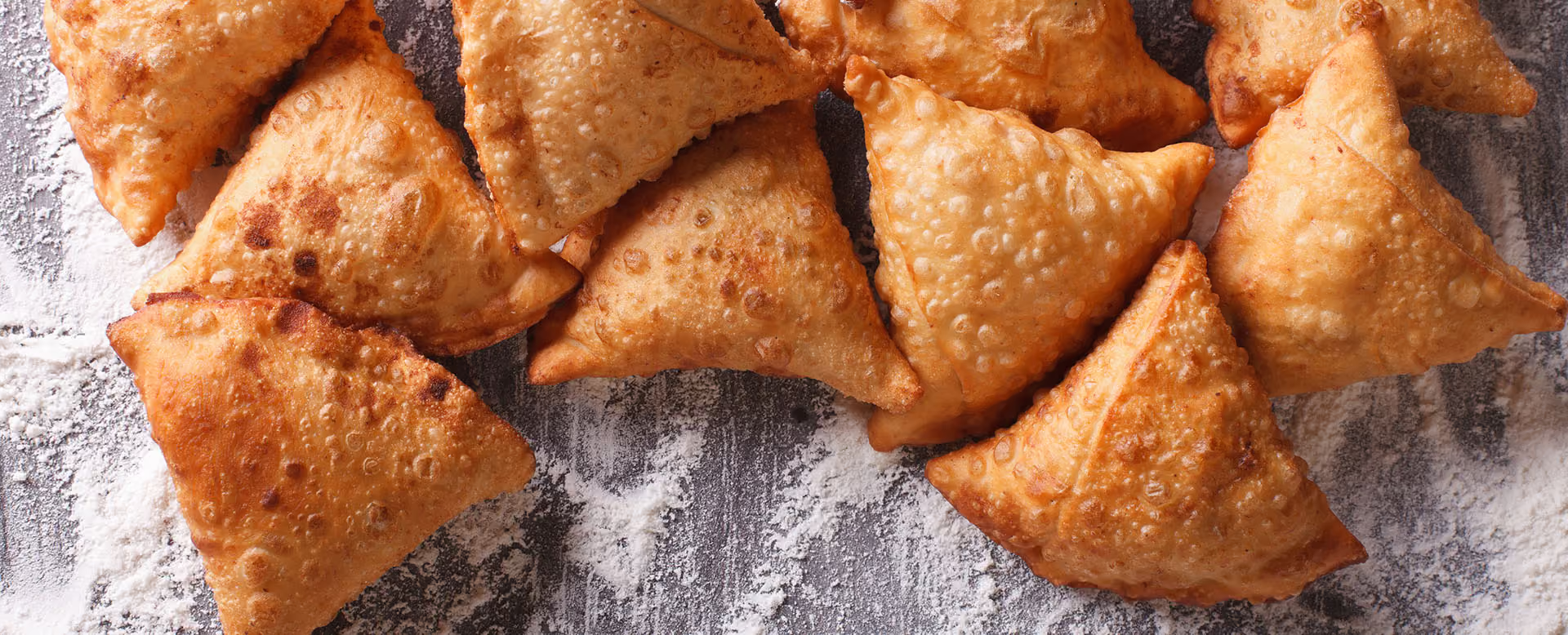
Indian snacks are amazing. Whether you're savoring a crispy samosa or moist gulab jamun, it's hard to go wrong with Indian snacks. Snacking is a huge part of Indian culture, but it can be confusing where to start. By the end of this article, you'll know how to snack like an Indian.
Indian snacks are amazing. Whether you’re savoring a crispy samosa or moist gulab jamun, it’s hard to go wrong with Indian snacks. Snacking is a huge part of Indian culture, but it can be confusing where to start. By the end of this article, you’ll know how to snack like an Indian.
Be forewarned, Indian snacks are often deep fried, contain ghee, heavy on the carbs, yet delectable when portion control is exercised.
1. Samosa & Chai Combo
Everyone knows about the delicious Indian Samosa, but have you tried it with Chai? Chai is India’s popular version of tea. The samosa, a potato filled pastry, soothes your appetite, while the chai, tea with milk, keeps you satiated. The Samosa Chai combo is perfect for when you’re on the go, as an afternoon snack, or when you want an excuse to eat a samosa. If someone offers you a samosa, say yes.

2. Pani Puri aka Gol Gappa
Literally translated to “Water Bread”, Pani Puri is a favorite of all South Asians and often considered a labor of love. You take a Puri into your hand and make a surgical style hole then fill it with tamarind water, onions, potatoes and even chickpeas. Pro tip: We recommend trying Pani Puri at an Indian snackshop like Patel Cafe where it is served with the toppings already inside.

3. Jalebi
The term South Asia commonly refers to the territories of Afghanistan, Bangladesh, Bhutan, Maldives, Nepal, India, Pakistan, and Sri Lanka – a vast and diverse community who differ on many issues yet agree on one… Jalebis are delicious. Jalebi is a fried dish made with chickpea flour and dipped in sugar syrup. They are circular and often have a bright orange color. The crystallized sugar coating and chewy texture means you should make sure there is a napkin handy (or two). It’s always a good day when you’ve had Jalebi.

(Credit: https://www.flickr.com/photos/soumya_p/)
4. Gulab Jamun
Similar to a donut except that… you need a spoon and the inside tastes like cake. Gulab Jamun is shaped into a ball and soaked in rose flavored sugar syrup. Unwritten rules state that you must eat Gulab Jamun in pairs. Pro tip: Use a bowl, only a sucker uses a plate.

5. Kulfi
Kulfi is a denser, creamier, and more popsicle-like version of ice cream. Like ice cream, milk, cream, and sugar serve as its base. Kulfi takes a longer time to melt than traditional ice-cream due to its density, thus if you’ve yet to master the art of the ice-cream lick, don’t give up! Try a kulfi. The most popular flavors of Kulfi are Malai (Vanilla-ish), Mango (Indian-style mango), and Pistachio (personal favorite).

6. Barfi
Have you ever tasted something and immediately thought, “This could use a silver coating”? Then you have to try Barfi. Barfi is created by thickening milk with sugar and other spices then spread out in a shallow dish and cut into cubes, triangles or diamond shapes to serve. Adding edible silver leaf (Vark) is a common practice at important events, weddings, and holidays. Barfis come in many shapes and sizes. Pro tip: If you don’t like the first Barfi, try another shape or size until you find the one for you.

7. Nimko aka Bombay Mix
A spicy & salty mix of fried lentils, peanuts, chickpeas, flour noodles, vegetable oil, flaked rice, fried onions, and curry leaves is a staple South Asian dry snack. A burst of flavor hits you upon first bite. In the time it takes your taste buds to figure out what’s exactly going on, you’ve already grabbed a handful more. They range from spicy to so spicy that you may feel your blood thinning. Pro tip: mix with regular cashews, almonds, and other nuts to tone down the heat.

Is there something we missed? Let us know in the comments!
Ramadan, Delayed Gratification, and Stoicism
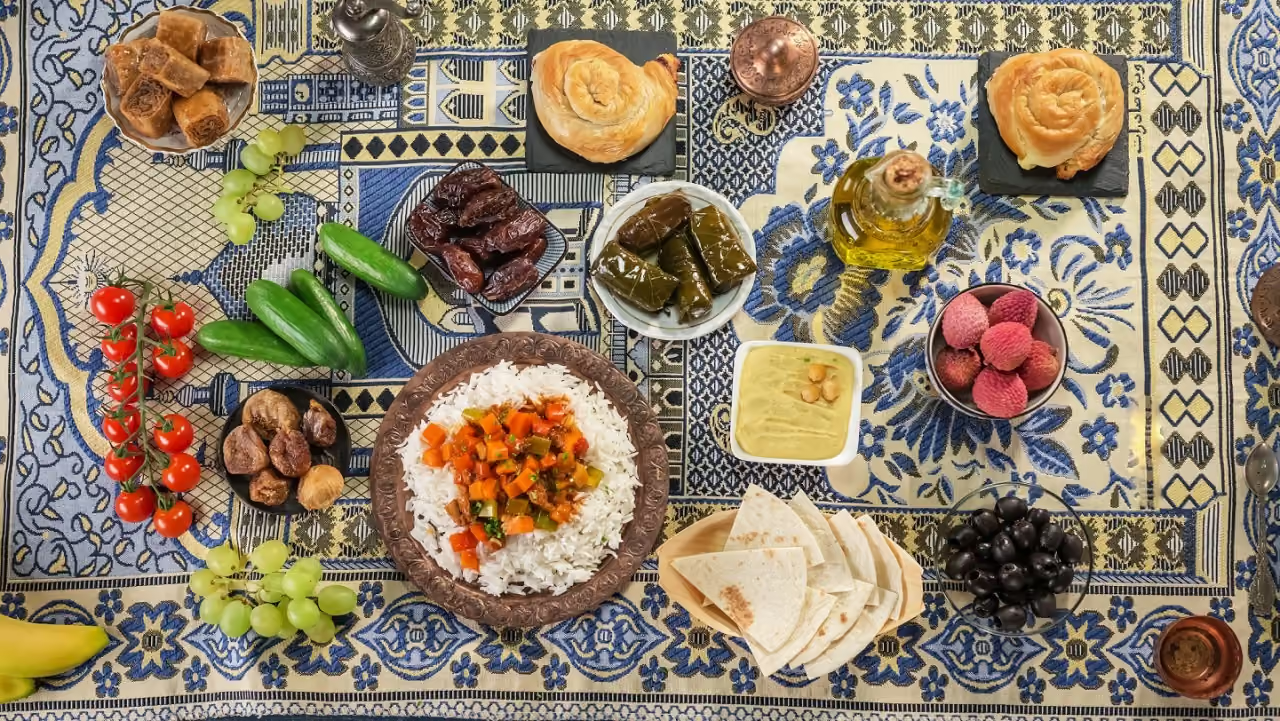
Ramadan is here. Faithful Muslims around the globe prepare for a month-long trek where from sunrise to sunset they refrain from food, drink, sex, smoking, and even anger. The anticipation begins to grow stronger as the first-day approaches.
“Until we have begun to go without them, we fail to realize how unnecessary many things are. We've been using them not because we needed them but because we had them.” ― Seneca, Letters from a Stoic
Ramadan is here. Faithful Muslims around the globe prepare for a month-long trek where from sunrise to sunset they refrain from food, drink, sex, smoking, and even anger. The anticipation begins to grow stronger as the first-day approaches.
To go against one's nature may seem daunting, especially to resist base urges like food & water. It takes time for the body to adapt and the first couple of days are anything but easy. But through this stoic practice, a greater appreciation arises. Consider abstaining from food, drink, sex, smoking, and anger from sunrise to sunset as inputs, while reflection, introspection, and a basic understanding of what it means to be human as outputs.
The aim of Ramadan is to experience and to understand that we are no better than anyone else. During Ramadan, Muslims renew their resolve against vices and make resolutions to be better in general. It's a yearly-reset (technically it's a little less than a year as Ramadan occurs every 355 days) where Muslims examine what they are looking for out of life.
Through this stoic Religious practice, they appreciate the little things that a month earlier seemed irrelevant. You’re thoughtful about the words you speak, the people you engage, and the energy you allocate. Fasting slows down your perception of time. Have you ever finished an episode of your favorite show, like Game of Thrones, and wondered where the time went. Time flows fast during these moments of joy, but during moments of suffering, it slows down like water in a choked up hose.
Fasting is the ultimate form of mindfulness for Muslims. So much of modern life is governed by our thoughts and with the addition of the symbiotic relationship we now have with smartphones, it seems we’re never in control. We make promises to ourselves that we don’t keep. We’d like to stay strict to a diet, a morning ritual, a fitness plan, but we’re often unable to follow through. In other words, we are dishonest with ourselves.
For Muslims, by resisting the most instinctive of desires, there is hypertrophy of the will-power muscle. You decide when you should eat or drink, not your urges. Strong-individuals recognize that goals require a certain amount of discipline. By engaging in this month long religious obligation, Muslims attempt to take control of the part of themselves that governs their everyday behavior. During the month of Ramadan, from sunrise to sunset, they are no longer victims of their thoughts and emotions (though what happens from sunset to sunrise may be a different story altogether).
Every year as Ramadan approaches, a little bit of anxiety sets in. How will I have the energy to go about my daily activities? I have to work, take care of my children, make dinner, etc. The Religious obligation seems insurmountable but every year countless Muslims fast, together. It provides them appreciation for things we take for granted in the Western world. The appreciation of water as the essence of life, food as a life force you are consuming, and family and friends with whom you share the food & water. It reminds them that the stoic lifestyle of Ramadan holds its own reward, it teaches us that if you’re not happy with what you have, you’ll never be happy with what you get.
Turmeric (Haldi): A Reawakened Relic of Ayurvedic Traditions
Recent research has legitimized Curcumin's powerful effects. Curcumin may have anti-inflammatory, antimicrobial, antiviral, antioxidant, antigiogenic, antidiabetic and perhaps even anticancer properties
When I was younger I sprained my ankle playing basketball. Ankle sprains are common in basketball, but that doesn't mean they won’t have you yelling for mommy. My parents were ready with a treatment on hand, Haldi (Turmeric). They claimed it was a herbal medicine that would "absorb the pain". I was immediately skeptical -- but my parents insisted I try it. I followed the R.I.C.E. (Rest, Ice, Compress, and Elevate) protocol but added an extra step where I rubbed Turmeric all over my ankle before wrapping it. They failed to mention the vibrant stain it leaves behind. I still remember the puzzled look on my friends faces when I showed up to school limping on a bright yellow ankle. Recently, I sprained my knee. After limping for days, I gave into the same treatment, a Turmeric wrap. I felt great the next day, it was as if the pain was sucked away. Now, I know what you're thinking (and I'm with you), it's most likely a coincidence. But it made me curious, how did this plant develop its massive reputation?

As a Westerner, I’ve always given alternative medicine the cold shoulder but recent research has legitimized Curcumin’s powerful effects. Curcumin may have anti-inflammatory, antimicrobial, antiviral, antioxidant, antigiogenic, antidiabetic and perhaps even anticancer properties. Research states that it may even be more effective than ibuprofen for those suffering from osteoarthritis. I had to learn more about this alleged magical plant.
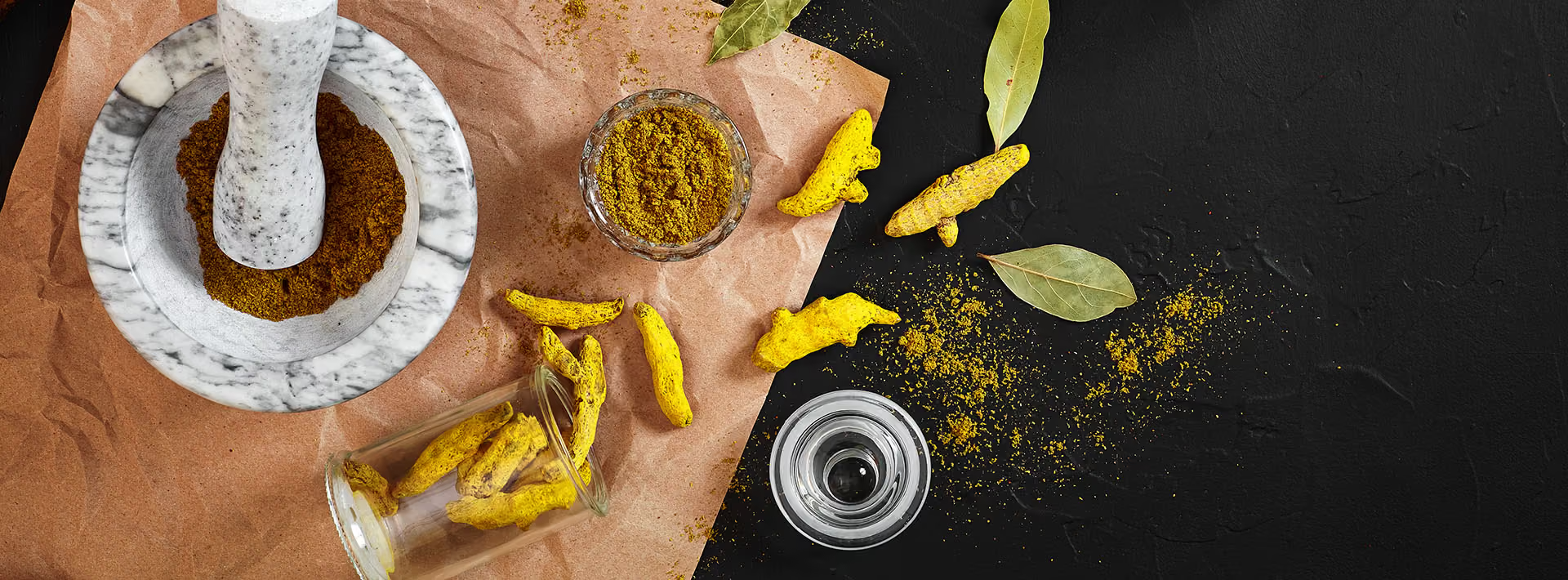
It turns out Turmeric is a member of the ginger family and is made from the tuberous roots of the plant Curcuma longa. Curcumin is the active ingredient in Turmeric responsible for its medicinal benefits. It’s also what gives Turmeric its vibrant yellow color. The effects of Curcumin have been studied for hundreds of years but for unexplained borderline conspiratorial reasons were not given the time of day by Western Medicine. Asian cultures have known about the Turmeric secret for some time now. It is commonly used in Asian food (especially in Curry). It’s also been used in Chinese and Ayurvedic medicines for thousands of years. Initially it was used to help heal wounds but its uses have grown since. In 2016, the interest in Turmeric is at an all-time high. Public interest combined with scientific research have led it to a prominent place in household spice racks and possibly medicine cabinets.
Researchers have focused heavily on its anti-inflammatory properties. As someone suffering from arthritis and alarmed by the FDA’s new stronger warning labels on Ibuprofen and similar anti-inflammatory medicines, Turmeric seemed like the smarter choice. Not only is it shown to reduce pain & inflammation, but it may also improve functional movement for those suffering from knee osteoarthritis.
There’s a catch. Turmeric by itself may not provide the full health benefits people are looking for. Though research shows that doses up to 12g/day in Humans may be safe, Turmeric exhibits poor bioavailability. Current recommended methods to increase its bioavailability include mixing it with black pepper & fats.
After diving into the research, it is evident that our ancestors had something right. My Turmeric journey has transformed my perspective on alternative medicine, from the days of doubting my parents to reading research papers testing it for conditions I didn’t know existed. To this day, I take pride in maintaining a healthy skepticism of herbal medicine, but it’s hard to deny that Tumeric is turning out to be a medicinal powerhouse.
In the age of social media, where continuous sharing and connectedness are normal parts of everyday life, it’s no surprise that Holi, a colorful holiday that preaches inclusion, revitalization, and oneness, has risen in popularity. A search for #holi2012 on Instagram populates around 251 results, while a search for #holi2015 returns over 20,000!

(Google Trends show a similar spike when searching for Holi)
A tradition that began thousands of years ago in Northern India has spread to the world. Holi is celebrated in conjunction with the full moon of Phalguna, and usually falls during February and March. A time when many are coming to grasps with the notion that winter is not everlasting. Spring is seen in cultures throughout the world as a time of revitalization, Holi brings this idea to a physical plane with a larger than life celebration more commonly known as the Festival of Colors
Holi in America is different from Holi in India. The celebrations in America usually last a day and are contained within a single event while Holi in India is a multi-day celebration that begins with the Holika Fire. Holika was a treacherous demon in Hindu Vedic scriptures who was burnt to death with the help of God Vishnu. Holi derives its name from Holika and celebrates the victory of good over evil. People fill the streets of India and squirt one another with colored water, water balloons, and paint each other’s faces. Their differences are suspended as the feeling of oneness propagates throughout the land. Every corner of India is reverberating with the shouts: “Bura na mano Holi hai!” (Don’t get offended, it's Holi!)

Image courtesy: Dogo News
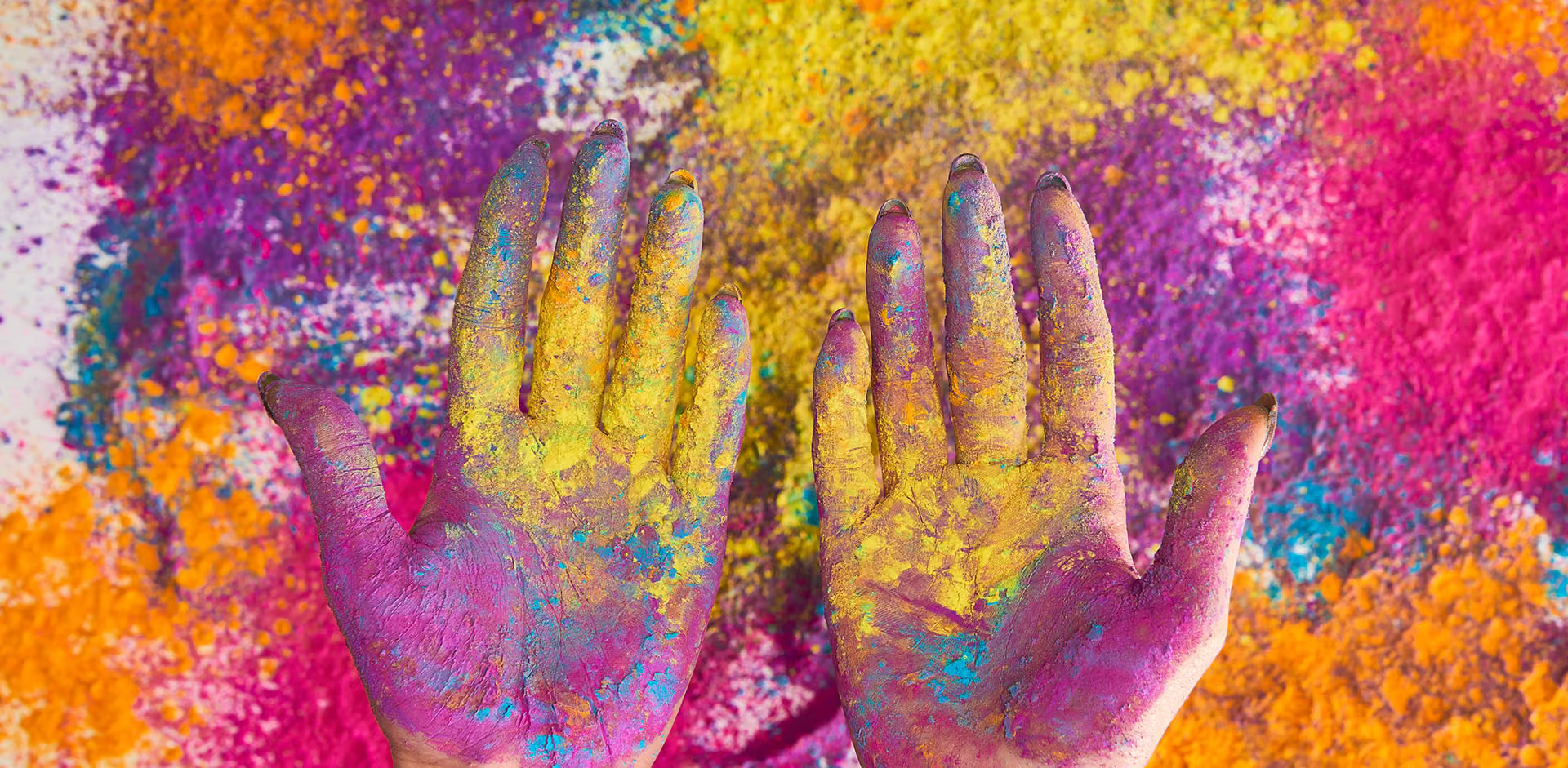
The throwing of colored powder into the air is what comes to mind when most people think of Holi. As the legend goes, the eclectic Lord Krishna griped to his mother about how a woman, Radha, had a fair complexion while his was dark. She suggested he throw color on Radha’s face and remove the difference between them. This is why people play with color and water during Holi, the splashes of color symbolize the breakdown of barriers of color, creed, and religion.

(Courtest of http://www.tyoharokakhazana.com/)
Holi celebrations have transformed into must attend cultural events. The Sri Radha Krishna Temple in Spanish Fork, Utah (approximately 50 miles South of Salt Lake City) recently held a 70,000 person multi-day Holi Festival where non Hindu attendees outnumbered Hindus 2 to 1. College campuses have also played a big part of Holi coming to the mainstream. During Holi, students at many campuses can be seen participating in Holi-inspired color throws.
The Soul of India is on full display during Holi. A vibrant energy which Indians believe represents their culture is felt in the air. The inclusive nature of the celebrations is on full display when crowds of strangers wearing all white t-shirts throw fistfuls of organic powder into the air and each other. At a time when the media portrays a divisive world, Holi serves a reminder that inclusion is the norm. The celebration of Holy by non-Hindus is the ultimate affirmation that some traditions are timeless.


